NI AI Extensions
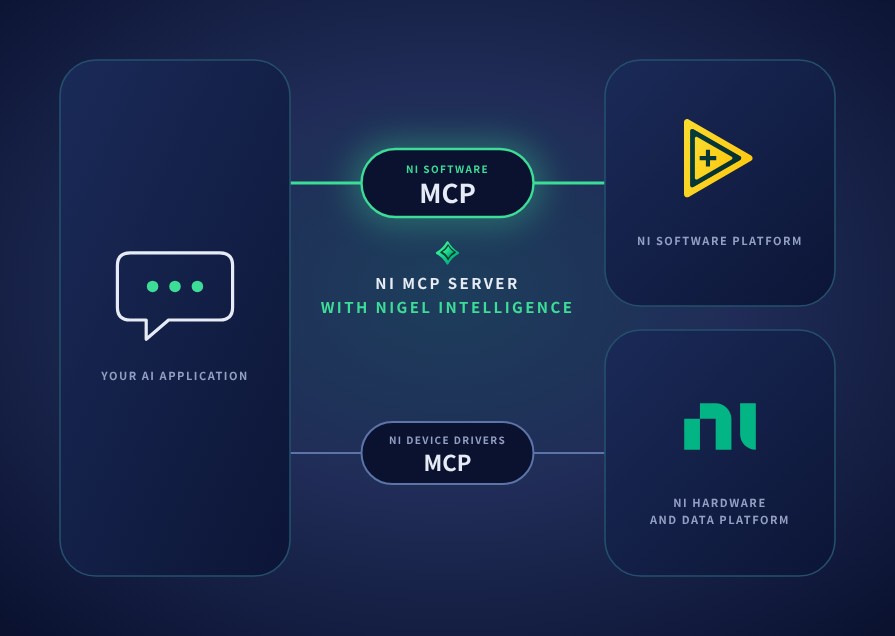
NI AI extensions, available as Model Context Protocol (MCP) servers, connect the NI platform with general-purpose AI applications. By providing NI-specific context and capabilities, these extensions help deliver performant hardware operation and software automation workflows. Supported configurations of Claude Code, Codex, Copilot, Gemini, and other AI applications require MCP support and access to the selected NI MCP server.
MCP Servers Connect the NI Platform and General-Purpose AI Applications
MCP is an open standard that enables AI applications to access external context and capabilities. MCP servers can expose tools (callable functions), resources (context and data), and prompts (reusable message templates).
Using an NI MCP server provides a set of tools, context, data, and prompts to make test and measurement-specific knowledge and supported capabilities available to your AI application of choice, such as Claude, Codex, or Cursor. These provide domain-specific guidance to improve the pass rate for automation requests and the accuracy of user questions.
For questions and debugging, NI MCP servers supply relevant NI hardware, software, and driver context to improve the quality of answers that help you understand a specification or explain why an action happened. Here are some question prompt examples:
- “Which NI DMM should I buy to measure 480 V AC line-to-line, CAT II?”
- “What aperture time should I use to measure a 5 V LDO with 20 µVrms noise?”
- “Why do shorted DMM probe tips measure 150 mΩ instead of zero?”
For more complex actions or outcome-focused requests, NI MCP servers can provide the context and supported tools to help accelerate developing and automating within NI software with grounding to ensure quality outcomes from AI agents. Here are some examples of outcome-focused prompts:
- “Create a producer/consumer LabVIEW project that acquires 4 thermocouple channels with DAQmx, logs to TDMS, and shuts down cleanly on error.”
- “Build a FlexLogger plug-in in LabVIEW from the template that reads my serial flow meter and publishes flow, temperature, and status channels.”
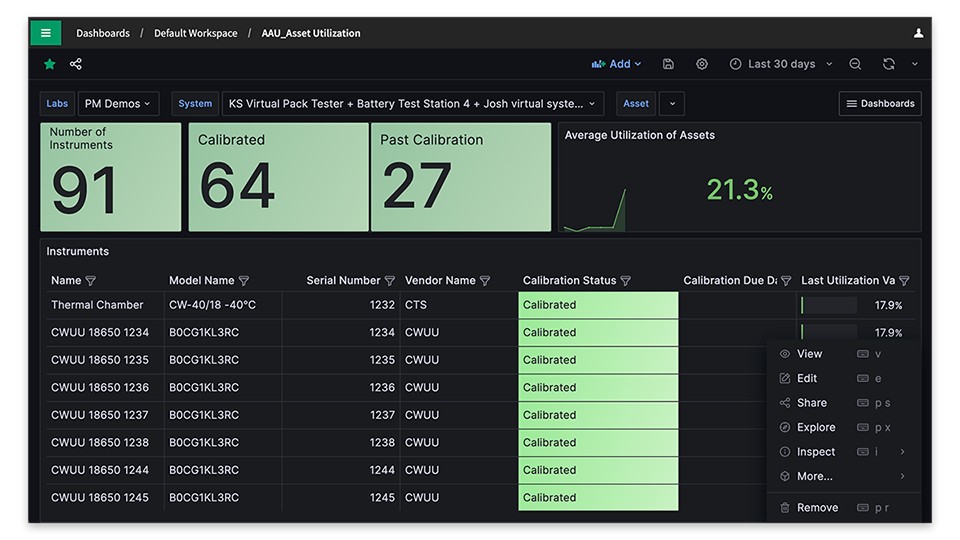
- “Based on my SystemLink systems, build a 90-day plan covering offline systems, calibration due dates, and outdated drivers.”
NI is committed to investing in our software platform and ensuring the decisions we make are aligned to your needs and priorities. View the roadmap for NI AI Extensions and software applications.
NI Device Drivers MCP Server
The NI Device Drivers MCP Server is a local MCP server that gives AI applications accurate knowledge of NI hardware and drivers. It goes beyond basic SCPI commands to provide deep driver knowledge to the general-purpose AI applications commonly used today. By providing this MCP server to your AI application, it will give more accurate answers to your hardware queries and author better-quality hardware driver-related code.
The NI Device Drivers MCP Server supports more than 400 different devices—including DAQ and PXI instrumentation—giving confidence in the measurement quality and synchronization to a broad set of applications. Using NI hardware with NI Device Drivers MCP Servers and third-party AI applications is a good approach to creating measurement applications. For deeper test expertise resulting in a higher completion rate and in-product integration, NI Nigel™ AI is recommended.
NI Hardware Supported by NI Device Drivers MCP Server
- RF and wireless instruments—Signal analyzers, signal generators, vector signal transceivers, and IF digitizers that use NI-RFSA, NI-RFSG, and NI-RFmx drivers
- RF switches and multiplexers that use the NI-SWITCH driver
- DAQ and sensor I/O hardware that uses the NI-DAQ™mx driver
- Oscilloscopes and digitizers that use the NI-SCOPE driver
- Digital multimeters that use the NI-DMM driver
- Digital pattern instruments that use the NI-Digital Pattern driver
- DC power supplies and SMUs that use the NI-DCPower driver
- Timing and synchronization hardware that use the NI-Sync driver
NI Software MCP Servers
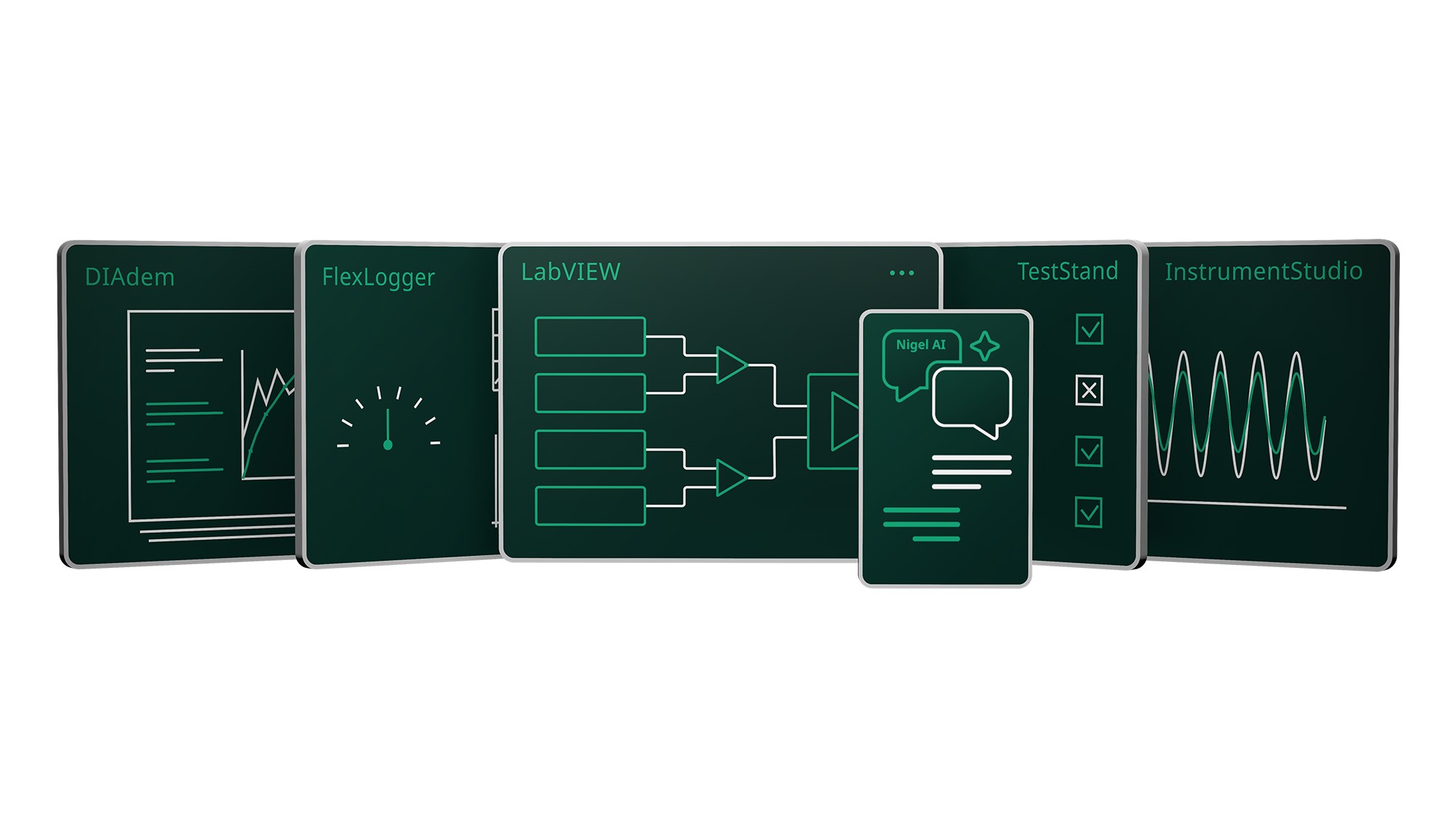
The NI Software MCP servers connect compatible AI applications with context and supported capabilities for NI LabVIEW+ Suite products and NI SystemLink™ software. This integration allows AI applications like Claude Code, Cursor, or Gemini to give better quality answers to software environment or functional questions. NI software MCP servers allow AI applications to automate functions, assist with debugging, accelerate system design, write and edit within the development environments you use, and take on complex tasks towards specific outcomes.
Learn more about MCP servers for NI software connectivity
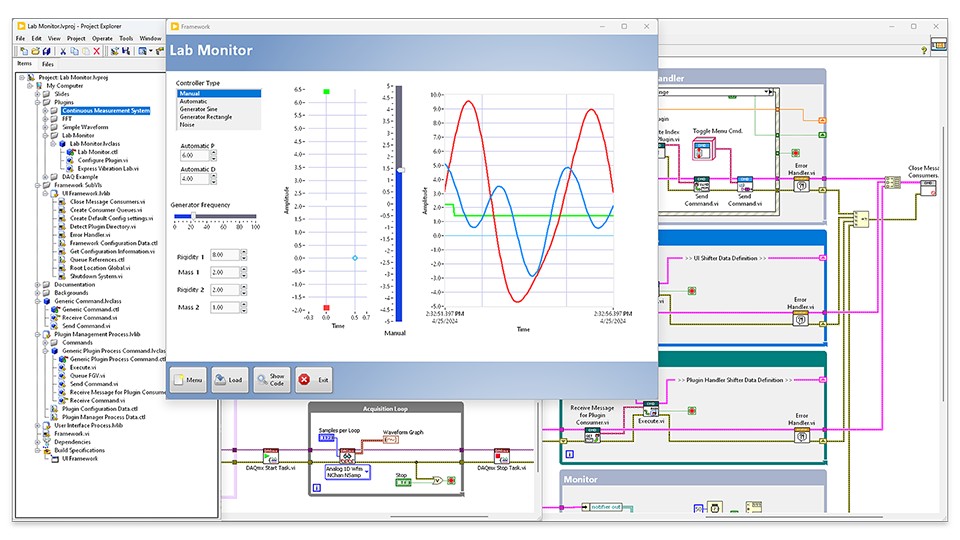
NI LabVIEW MCP
COMING SOON: Query and control LabVIEW
- Explain and document VIs
- Write and edit LabVIEW code
- Debug projects and applications
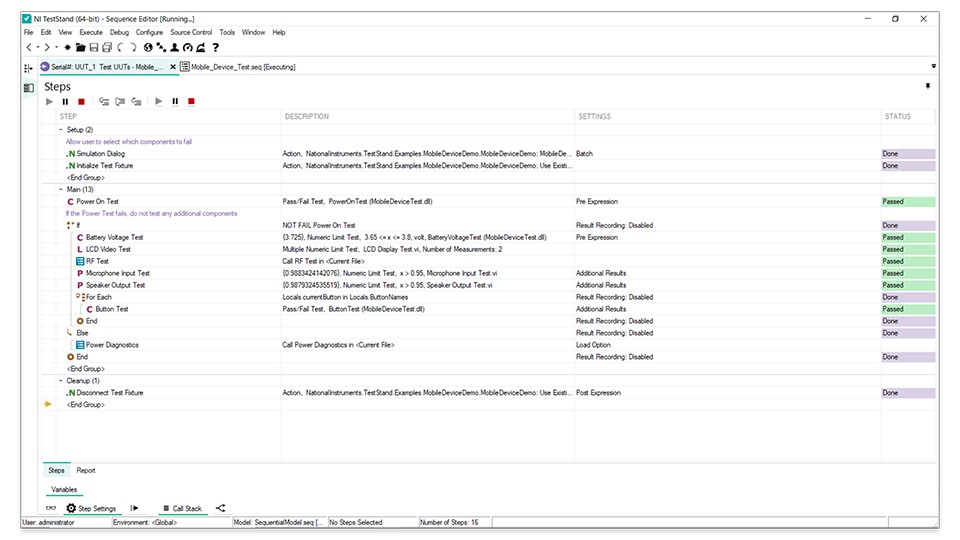
NI TestStand MCP
COMING SOON: Query and control TestStand
- Batch update test parameters
- Write, edit, and debug test sequences
- Build high-performance applications
NI SystemLink MCP
Query SystemLink attributes and data, including:
- Identifying installed software
- Checking system availability
- Analyzing test results
Develop More Quickly with a Test-Specific AI
Nigel is unlike any other AI technology. It’s specifically built for test and measurement applications with advanced test expertise and integration into NI software. If you have a choice of AI applications with your organization, Nigel provides a streamlined approach to test development with no MCP server installation required. It is built on modern AI models and natively has skills to make it an expert in test and measurement applications, especially NI hardware and software.